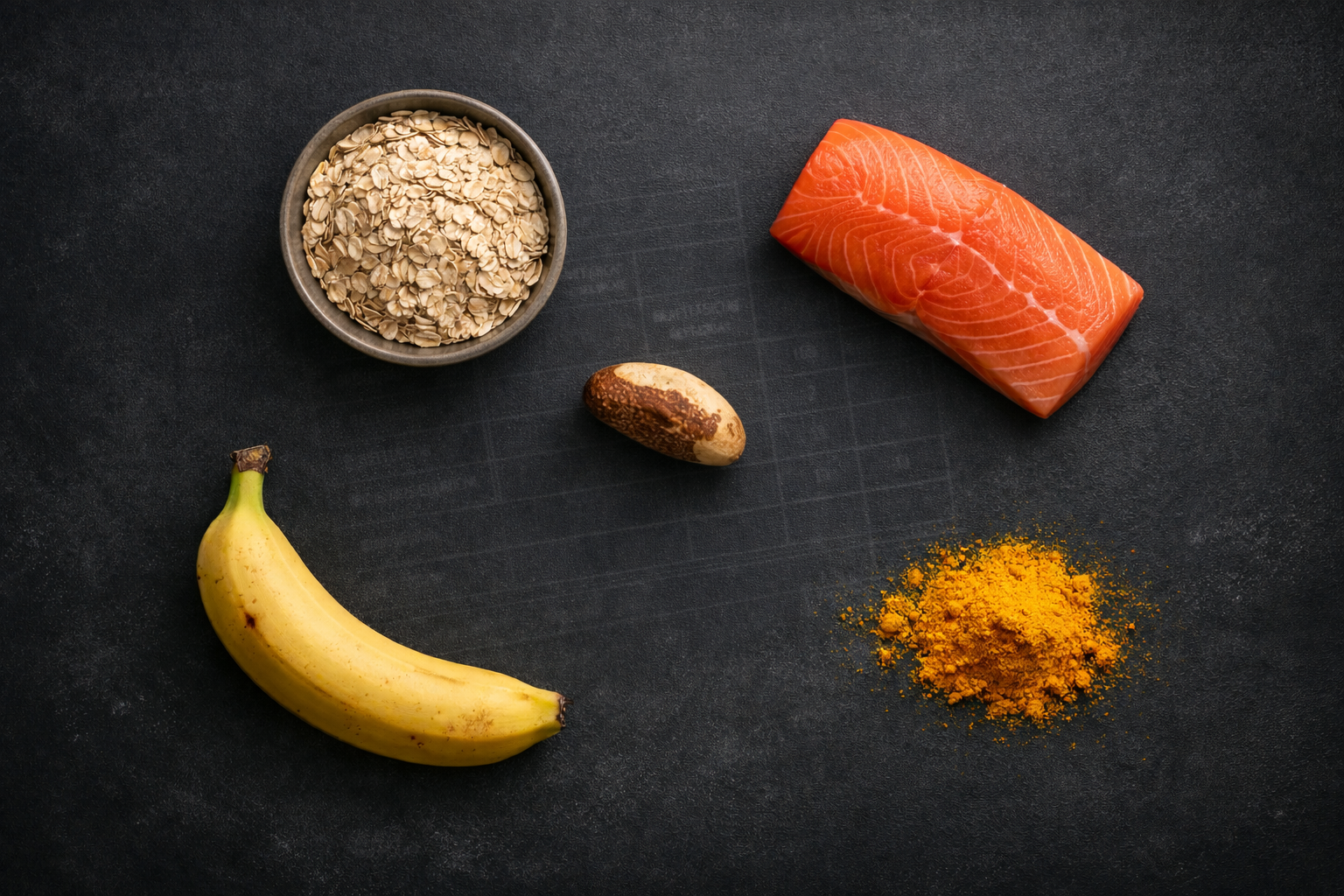
I've updated the nutrition section on this site — not a cosmetic refresh, a full overhaul. Part of preparing for CRS+HIPEC surgery consultations has meant organizing every health record I have into a structured format — labs, imaging, pathology, the works. Once it's all in one place, you can query it. Ask it questions. And it turns out, when you ask the right questions, the answers change what you're doing.
The original page was built for a generic FOLFIRI patient on a standard infusion schedule. Turns out I'm not a generic FOLFIRI patient. I have gallstones, elevated pancreatic amylase, Hashimoto's antibodies, a history of papillary thyroid cancer, erosive esophagitis, and gastric metaplasia. I'm a wreck! Each of those changes what I should and shouldn't eat, and when.
But first — where things stand.
The Numbers
Six cycles into FOLFIRI + bevacizumab. Cycle 6 started yesterday March 25 and ends March 27.The February imaging was the kind of news you don't take for granted. Whole-body FDG PET/CT showed apparently complete metabolic response — no FDG-avid peritoneal disease. The MRI the same month confirmed partial radiological response. All four measurable implants shrank significantly. The largest went from 28×21 mm down to 15×3 mm.
That's the direction things need to go.
Six more cycles planned. Additional imaging after cycle 8 is planned. The parallel track — whether I'm a candidate for CRS+HIPEC — is still being evaluated.
On the side-effect front: the oxaliplatin neuropathy from FOLFOX has largely resolved. Minor residual tingling, nothing disabling. Liver enzymes remain elevated, as they have for a while now — still no clean explanation for that pattern. CRP has been running at 2–3 mg/dL for months, meaning ongoing systemic inflammation even with the metabolic response. Something is still active down there.
The Curcumin Issue
This one needed immediate attention.Curcumin at supplement doses should not be taken during active FOLFIRI without oncologist sign-off. Here's the mechanism: irinotecan's active toxic metabolite — SN-38 — is inactivated by an enzyme called UGT1A1 through glucuronidation. Curcumin inhibits UGT1A1. When UGT1A1 gets inhibited, SN-38 accumulates. That directly amplifies irinotecan's two worst toxicities: late-onset diarrhea and neutropenia.
It's the same mechanism that makes the UGT1A1*28 polymorphism — Gilbert's syndrome — clinically significant for irinotecan dosing. The enzyme can't do its job, the metabolite builds up, and you get a harder hit than intended.
Curcumin has been pulled from my supplement protocol pending oncologist review. Culinary turmeric in cooking is fine — the absorbed dose from food is too low to cause a meaningful pharmacokinetic interaction. But the capsule form at therapeutic doses is a different story.
The updated nutrition page flags this prominently.
What Else Changed
Irinotecan diarrhea protocol. Late-onset irinotecan diarrhea is one of FOLFIRI's primary GI risks, typically peaking around Days 2–5 post-infusion. Six cycles in, I haven't had it — whatever I've been eating is apparently working. The updated nutrition page documents the full protocol anyway: soluble fiber over insoluble, a low-fat ceiling in the early window, and a note on Lactobacillus rhamnosus GG, which has RCT-level evidence for reducing severity. Worth knowing. Hopefully never needed.Protein target. The original plan had no daily number. Under active chemotherapy at my body weight, the target is 120–130 g/day. Albumin has been running 3.6–3.8 under FOLFIRI — technically normal, but not adequate for a HIPEC surgery evaluation. Protein intake is the primary lever for albumin synthesis. That number matters if CRS+HIPEC becomes the next step.
Fat restriction — permanent. Labs show persistently elevated pancreatic amylase alongside confirmed gallstones. High-fat meals stimulate both gallbladder contraction and pancreatic secretion. That combination has a name — biliary pancreatitis — and it's not something you want to learn about from the inside. This isn't a Days 0–3 precaution anymore. A daily fat ceiling has been added to the permanent protocol.
Selenium. Anti-thyroglobulin antibodies came back at 539.7 UI/mL — more than five times the upper limit of normal. That confirms active Hashimoto's autoimmunity in the remaining thyroid lobe. I had a left hemithyroidectomy in 2019 for papillary thyroid carcinoma. The right lobe is what's left, and the immune system is currently going after it. Selenium at 100–200 mcg/day has consistent evidence for reducing thyroid antibodies in Hashimoto's. One to two Brazil nuts a day covers it. Low-risk, low-cost, added permanently.
Vitamin D. Still waiting on a current level — the last measurement was in 2020. Target for active colorectal cancer is 40–60 ng/mL serum 25-OH-D. It's on the next blood draw request.
Esophagitis and gastric metaplasia. An EGD in May 2025 found erosive esophagitis Grade B and complete-type antral intestinal metaplasia involving 10% of glands. The metaplasia is a recognised gastric cancer precursor. Permanent dietary exclusions added: processed and cured meats, high-sodium foods, smoked products. The esophagitis adds standard GERD-management rules to the day-to-day eating protocol.
Labs added to the next draw. Several markers hadn't been checked in years. Coming up: Vitamin D (25-OH), fasting lipid panel (LDL was 161 mg/dL untreated back in April 2022), HbA1c (was 6.0% in April 2024 — pre-diabetic range), and iron studies including ferritin.
The Bigger Picture
A chemo nutrition plan built for a generic FOLFIRI patient doesn't account for the full clinical picture. The gallstones, the pancreatic amylase, the Hashimoto's antibodies, the esophagitis, the liver pattern, the HIPEC candidacy requirements — each one changes how specific foods and supplements should be used and when. The original page wasn't wrong. It just wasn't mine.The updated page is.
It's still personal research documentation — not medical advice — but it's calibrated to the actual situation now, not the general case.
Nutrition page: craigdaniels.me/cancer/nutrition