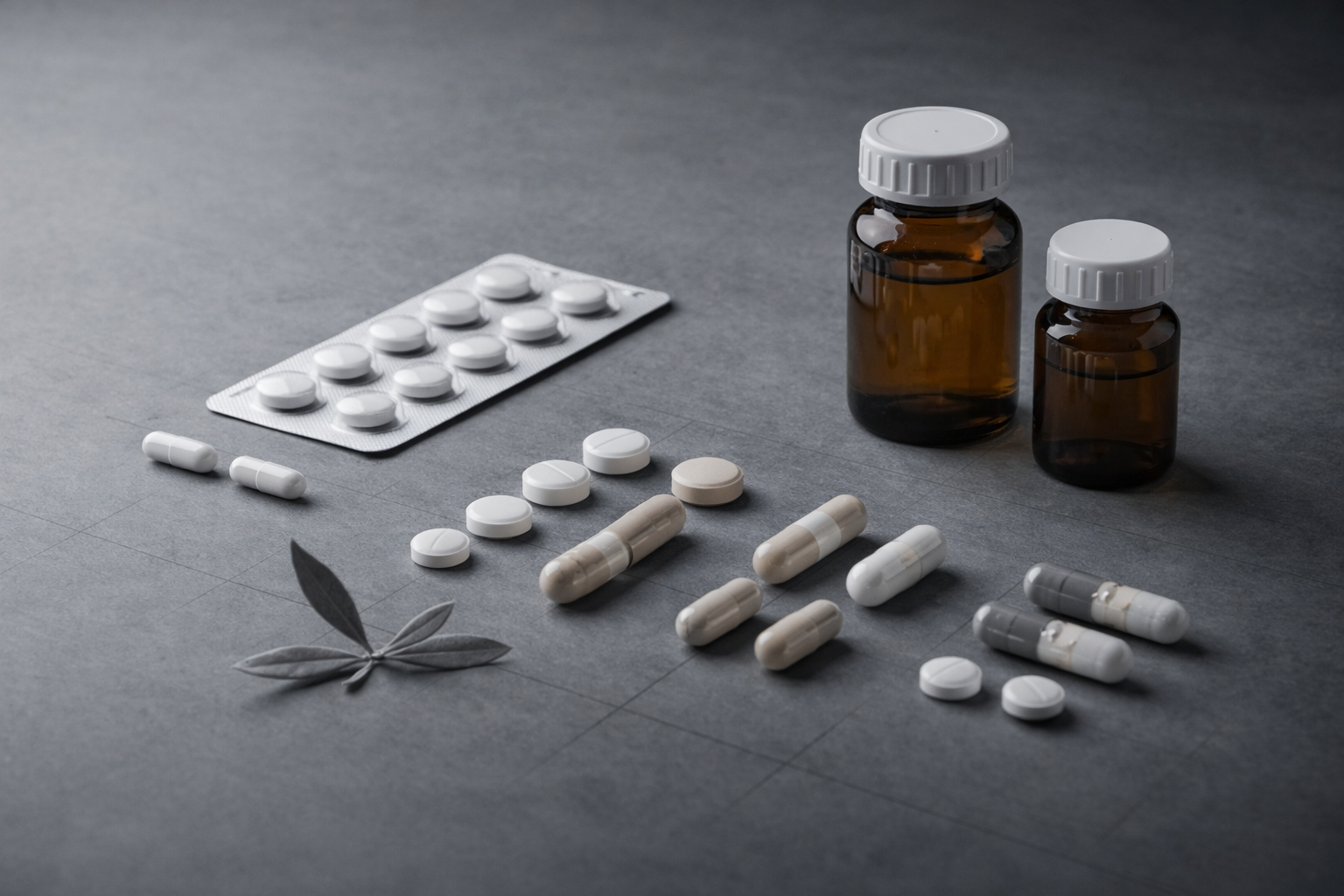
Medications & Supplements
Chemo Compatibility: Meds & Supplements
This page documents the review I ran on every supplement (and a few key medications) I was taking during FOLFIRI chemotherapy in 2025–2026. The purpose is risk control: keep what plausibly supports recovery and quality-of-life, and pause or remove anything that could increase toxicity, worsen side effects, interfere with chemotherapy, or confuse lab interpretation.
8 Key Questions
- Benefit for cancer/chemo (human evidence vs theory)?
- Timing in chemo cycle (take/hold days)?
- Interference risk with FOLFIRI?
- Hepatotoxicity risk?
- Effects on metabolism/clearance (CYP/UGT/transporters)?
- Cytoprotective/antioxidant risk during chemo window?
- Human data in cancer patients?
- Worsens my side effects (diarrhea, neuropathy, dehydration, fatigue)?
Meds / Supplements
Alpha-Lipoic
- Helps: used for neuropathy in other contexts; studied for chemotherapy-induced peripheral neuropathy (CIPN), mainly with platinum regimens.
- Reality check: human trial data does not clearly prove prevention of CIPN; results are mixed and not FOLFIRI-specific.
- Timing: if you use it, consider pushing it away from infusion days (hold Day 0–2) as a conservative rule.
- Cytoprotection risk: antioxidant effects are a theoretical concern during peak chemo effect window.
- Side effects: can cause GI upset; monitor if you’re already battling nausea/diarrhea.
Collagen
- Helps: supportive protein source; may help joints/skin/tendons (quality-of-life, not cancer control).
- Chemo interaction: no documented direct drug interactions for collagen itself in a clinical review; risk is usually additives.
- Timing: generally flexible; avoid only if it worsens nausea on infusion week.
- Side effects: GI upset/allergy can occur depending on source (bovine/marine) and flavoring additives.
- Purity: prefer unflavored, minimal-ingredient products to reduce additive/contamination risk.
Protein Powder
- Helps: convenient way to hit protein targets when appetite is low; supports muscle maintenance.
- Liver caution: rare published cases of supplement-associated liver injury (risk rises with multi-ingredient blends/additives).
- Purity: pick a third-party tested product; avoid “kitchen sink” formulas (herbs + stimulants + sweeteners).
- Timing: flexible; avoid around infusion if it worsens nausea/bloating.
- Side effects: sweeteners/additives can aggravate GI symptoms; simplify if diarrhea risk is high.
Glucosamine/Chondroitin
- Helps: joint pain support (quality-of-life), not cancer control.
- Liver caution: glucosamine has rare case reports of clinically apparent liver injury; if AST/ALT spike, this is a candidate to pause.
- Purity: higher risk with multi-ingredient “joint” blends—keep it simple if you use it.
- Timing: generally flexible; hold if you see unexplained LFT changes.
- Side effects: can cause GI upset in some people.
Elvanse
- Helps: clinically indicated for ADHD; can improve focus/energy/function.
- Metabolism: lisdexamfetamine is not metabolized by CYP450; converted to active amphetamine via first-pass processes.
- Chemo-cycle caution: appetite suppression + dehydration risk can be a problem on/after infusion—monitor closely on Day 0–3.
- Side effects: can worsen insomnia/anxiety; sleep debt compounds chemo fatigue.
- Practical: discuss if dose timing should change during infusion week to protect sleep and hydration.
Sertralina
- Helps: clinically effective for anxiety/depression; mental stability matters during chemo.
- Liver caution: prescribing information recommends lower or less frequent dosing in hepatic impairment; relevant given liver enzyme volatility.
- Chemo interaction: not a classic FOLFIRI blocker, but any hepatic stressor is worth tracking when LFTs fluctuate.
- Side effects: can cause GI effects (nausea/diarrhea) and affect sleep—watch overlap with irinotecan GI toxicity and fatigue.
- Practical: if LFTs worsen, flag this medication in your oncology review (don’t self-stop abruptly).
Curcumin
- Helps: anti-inflammatory effects; some human oncology research exists, but not definitive for outcomes.
- Major caution (FOLFIRI): curcumin can inhibit UDP-glucuronyltransferases; irinotecan clearance depends on glucuronidation → potential toxicity risk.
- Timing: conservative approach is hold at least Day 0–3 (and discuss with oncology before using at all with irinotecan).
- Cytoprotection risk: antioxidant/cytoprotective signaling is a theoretical concern during the peak chemo window.
- Side effects: can worsen GI upset in some people (not ideal if irinotecan diarrhea is a risk).
Meds / Supplements - Demoted
These were removed from my regimen during chemo because they presented issues.
Creatine
While taking creatine my creatine kinase (CK) level was elevated to 1123, far above the reference range. I had also pushed a workout too hard, but my oncologist suggested I stop taking creatine.
Important: This is personal research documentation, not medical advice.