Recently, I was in a HIPEC Facebook group and came across a post recommending I do myself a favor — buy a spirometer now and start using it immediately. That intrigued me. So I started digging.
Why a spirometer matters for CRS+HIPEC
CRS+HIPEC is one of the hardest surgeries you can have on your lungs without anyone touching them. The reasons:
Long midline incision. Six to twelve-plus hours of open abdominal surgery.
Upper abdominal dissection. For peri-hepatic disease — which is exactly what I have — the surgeon often strips tissue off the diaphragm. The diaphragm is your main breathing muscle.
Heated intraperitoneal chemotherapy. The perfusion phase itself stresses the lungs and the chest cavity.
Pain. A fresh midline scar makes you take shallow, careful breaths for days.
Your diaphragm stops moving well. The bases of your lungs collapse — that's atelectasis. Collapsed lung tissue gets infected. Pulmonary complications after CRS+HIPEC are common. Pleural effusion, atelectasis, and pneumonia are the big three.
An incentive spirometer fights all of that. You inhale slowly and deeply through the device, hold the breath, let it out. That single action reopens collapsed alveoli, maintains lung volume, and clears secretions. It's the cheapest, simplest piece of post-op equipment in the hospital.
Why start now, not the day before surgery
Reason 1: You're training a muscle. Your diaphragm and inspiratory muscles respond to training the same way your biceps do. The evidence for pre-operative inspiratory muscle training is strongest in cardiac surgery, with growing support in major abdominal surgery.
Reason 2: Technique under duress. The day after surgery I'll be in pain, sedated, and unmotivated. Learning a new breathing device in that state is a losing battle. If I already know the rhythm, I'll do it correctly when it matters.
This is the entire principle behind pre-habilitation: train the body for the trauma of surgery before the trauma happens.
What to buy
Tier 1: Volume-based incentive spirometer (~€10–20). The basic device every hospital uses. Plastic chamber, piston that rises as you inhale, marker for your target volume. This is the minimum.
Buy a volume-based model, not a flow-based one. Volume-based devices measure how much air you moved. Flow-based devices measure how fast you moved it. Volume is what matters for lung recovery.
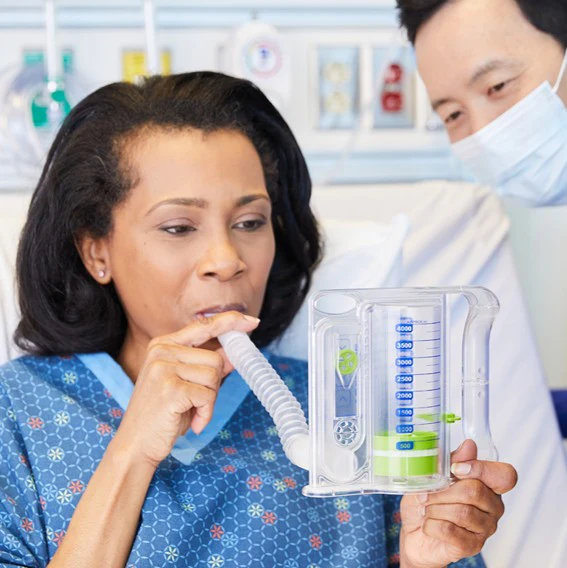
Tier 2: Inspiratory muscle trainer (~€40–80). Different category of device. Instead of measuring volume, it provides adjustable resistance against your inhalation — actual strength training for your diaphragm. Brands: PowerBreathe, POWERbreathe Medic, Threshold IMT.
If you're serious about pre-hab, this is the device you want.
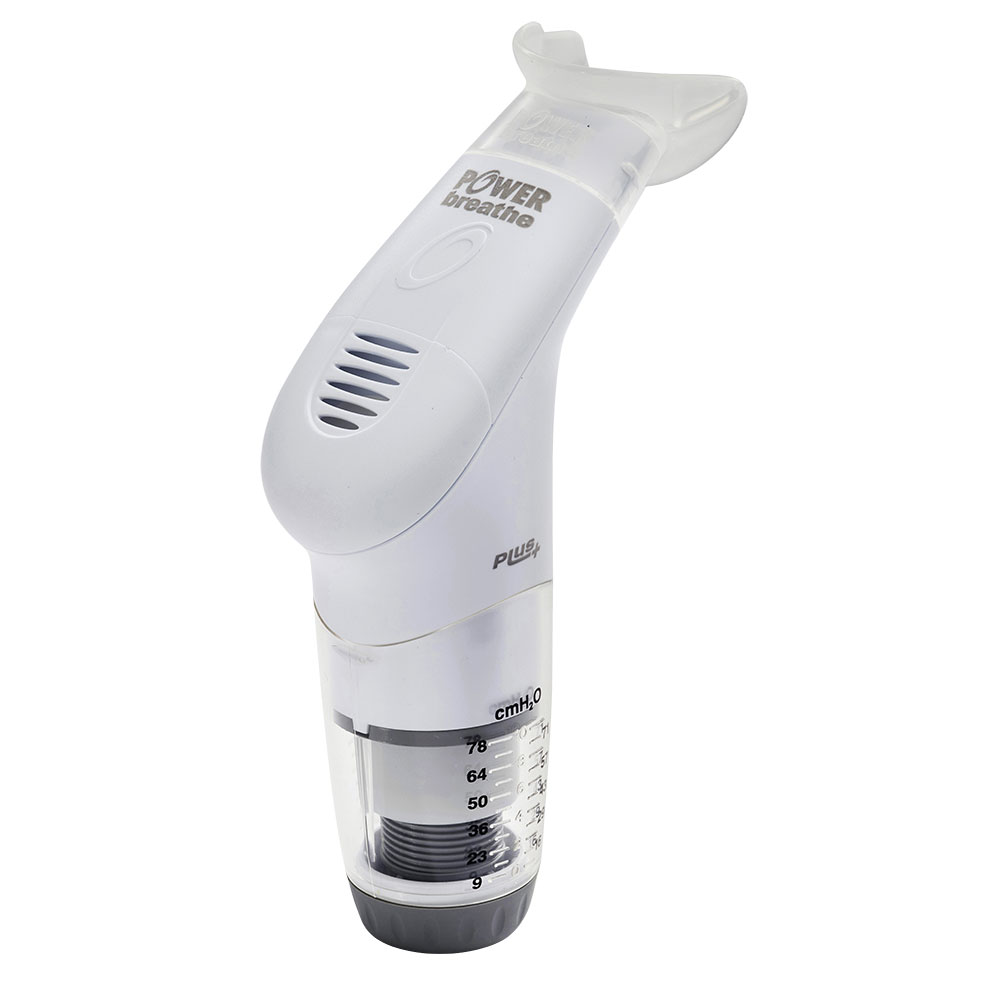
Tier 3: Combined or digital systems (€100+). App-connected trainers that track sessions, adjust resistance automatically, log progress. Nice to have. Not necessary. The basic IMT does the same job.
The other half: cardio
A spirometer trains your lungs in isolation. Cardio trains the whole system — heart, lungs, vascular network, muscles — to use oxygen efficiently. Both matter. The pre-hab evidence is strongest when breathing exercises are combined with aerobic conditioning rather than done alone.
The challenge is I'm on chemo. I can't train like an athlete, but I can train like someone who refuses to lose ground.
Practical target: 150 minutes of moderate cardio per week if I can hit it. That's the standard adult recommendation. No reason to aim lower just because I'm on FOLFIRI.
Bottom line
A €15 plastic tube isn't going to save my life. But it lets me train my body for a more predictable outcome.