Dad, always prepared, handed us another box. Inside was the solution: a BB gun trap—a steel box with a black front panel and bright red spinning targets inside, roughly the size of those little tube TVs everyone had in their basement. It promised hours of entertainment indoors.
That same morning, Dad set up the trap in our unfinished basement. The space was dimly lit and functional, with cinder-block walls and black linoleum tiles flecked with white specks, like paint splatters. The trap stood against the farthest wall. My brother and I perched halfway up the wooden steps, a carton of Copperhead BBs between us, the pellets glinting like tiny, polished pennies in the faint light.
The BB gun felt awkward in my small hands. My arms weren't long enough to shoulder the stock correctly, so I tucked it under my arm and rested the curved bend near my cheek. It wasn't textbook, but it worked.
Each shot echoed through the basement, metallic pings filling the air. Occasionally, one would ricochet, zipping past us like an angry hornet, adding an edge of danger to the thrill. It was exhilarating — reckless in the best possible way — and exactly how we wanted to break in our Christmas present.
That morning was only the beginning. Shooting had always been part of our family culture, usually at my grandfather's camper. By the mid-1970s, the camper had become a permanent fixture on a flat patch of land near the Shell Rock River, just a 30-minute drive from his house in Cedar Falls.
The land stretched lazily to the riverbank, with woods on one side and dirt trails carved by motorcycles on the other. For the men in my family, it was an escape—a place to raise hell riding bikes and shooting guns. Swimming in the river had once been a favorite pastime, but after Jaws hit theaters in 1975, even the shallow, familiar waters of Shell Rock seemed ominous.
Hunting and shooting were central to life there. Rabbits and squirrels were common game. Beer cans and paper targets became victims of rifles and pistols. Clay pigeons soared into the air, shattered by well-placed shotgun blasts. For the men in my family, shooting was more than a sport—it was a ritual, a test of skill and character.
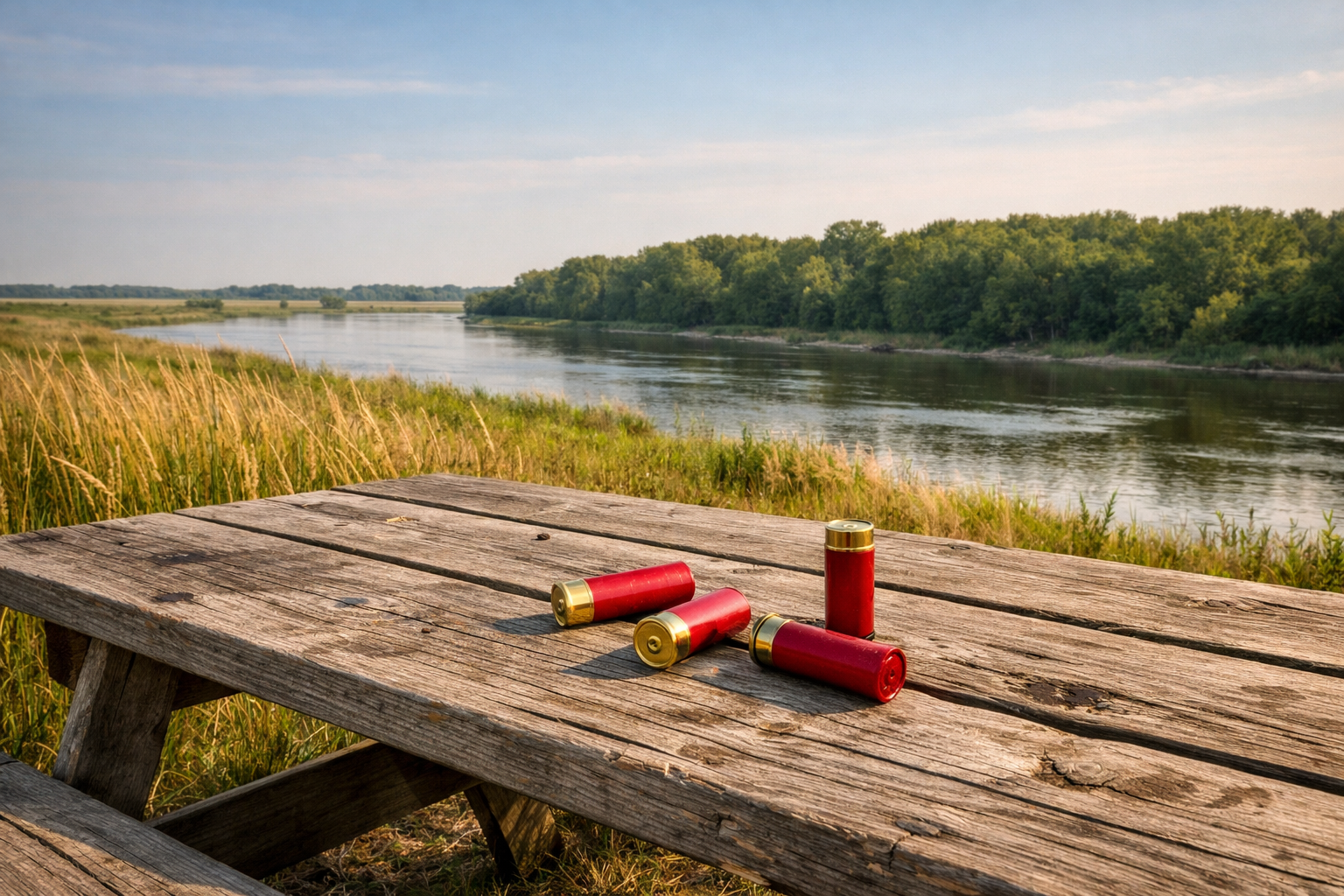
The summer of 1983 marked my initiation into this world. The memory is hazy but monumental, like an old photograph worn at the edges. My grandfather, dad, uncles, brother, and I gathered around a picnic table. Guns were everywhere, laid out like tools in a craftsman's workshop.
I started with the BB gun, pinging beer cans, each hit boosting my confidence. Then Dad placed a shotgun in front of me—a single-shot, 20-gauge with a break-open barrel.
The shotgun felt impossibly heavy in my eight-year-old hands. Dad handed me a shell, its dark red casing capped with a gleaming brass top. I loaded it the way I'd watched the others do — breaking the barrel open, thumbing the shell in, snapping it shut. I positioned the gun on the table, steadying the barrel with my left hand while my right found the trigger. Lowering my cheek to the stock, I closed one eye and lined up the sights, just as I had with my BB gun.
I pulled the trigger.
The explosion was deafening. The recoil slammed into my shoulder like a sledgehammer. Pain flared across my face—sharp and immediate—and I screamed. Blood trickled down my cheek, warm and sticky, as chaos erupted around me.
Dad was at my side in an instant, inspecting the wound, fearing I'd punctured my eye. Tears blurred my vision, but I could see the fear in his. A jagged cut ran vertically along my face, just a millimeter from my eye. Only then did we realize what had happened: the shotgun's hammer had struck me when I pulled the stock close to my cheek, mimicking how I'd held the BB gun.
The debate began—stitches or a butterfly bandage? I didn't know what a butterfly bandage was, but it sounded like a hack compared to proper stitches. My family decided to skip the hospital and searched through the camper until someone found the small adhesive strip. They pressed it closed — the wings pulling the edges of the cut together, holding. It worked. Over time, the scar faded, but even decades later, if you look closely, you can still see a faint, permanent reminder of that day.
Early draft — the finished chapter is in the book.