The last MRI restuls are in...
The cancer is still present — but everything measurable has shrunk.
The implants remain on the surface of the liver, not inside the tissue itself, and in the pelvis. What changed is their size:
The implant near liver segment VII went from 19 × 6 mm down to 13 × 1 mm. The implant near segment VI went from 28 × 21 mm down to 15 × 3 mm — a substantial reduction. The two pelvic implants dropped from 15 mm to 11 mm and 13 mm to 8 mm.
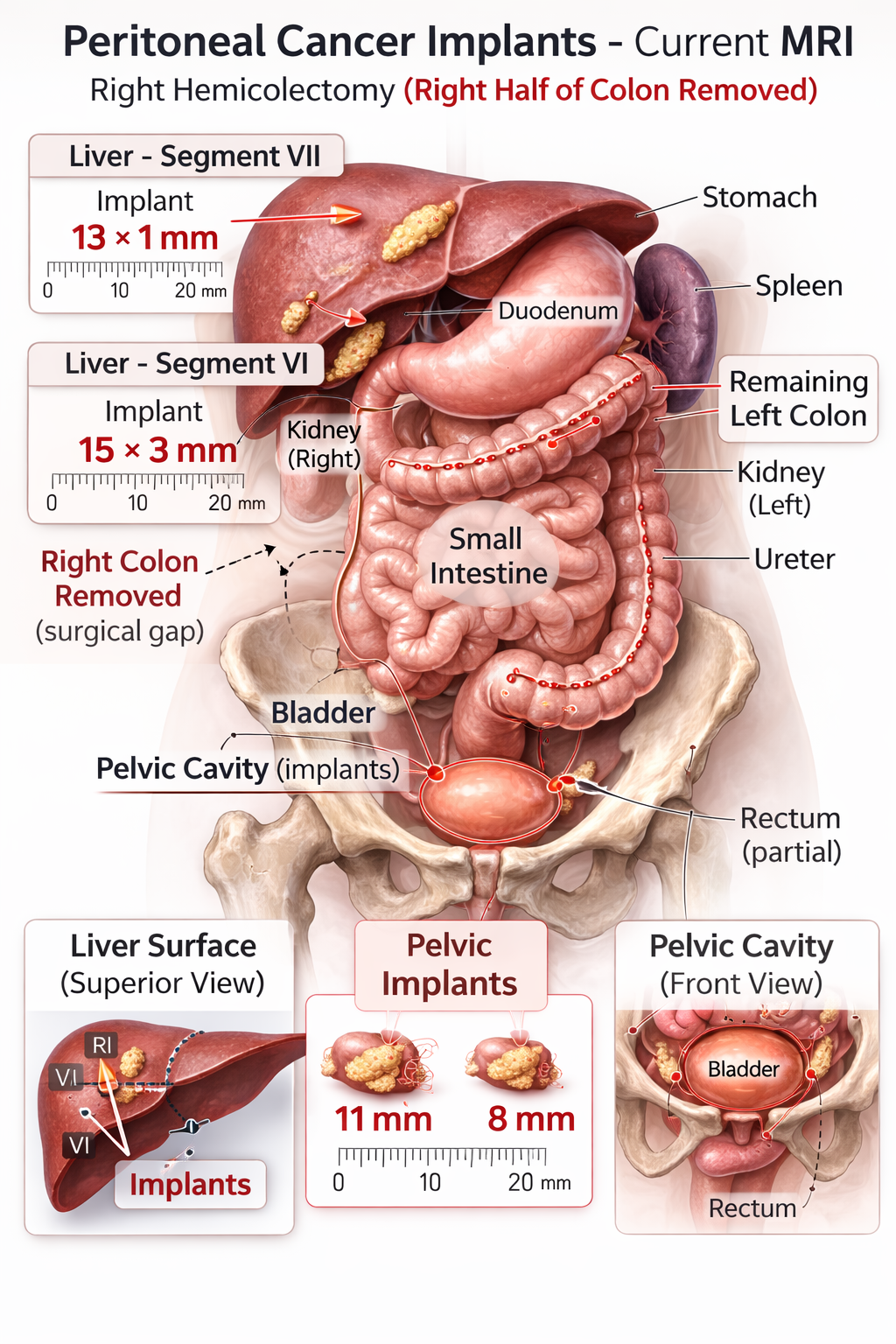
No new lesions. No fluid buildup. No lymph node enlargement. No tumors inside the liver itself. No bone involvement.
The radiologist called it a partial response — which in oncology means the chemotherapy is working. The disease burden has decreased. Not gone. But clearly regressed.
A recent PET scan showed no active metabolic uptake. The MRI, which looks at structure rather than metabolism, still detects the nodules. That combination typically means the tumors are smaller and less metabolically active — but not gone.
One concern I'd been carrying was systemic spread. Seeing implants in different areas of the abdomen makes it feel like the cancer is scattered everywhere. But that's not how this type of spread works. Peritoneal metastases travel within the abdominal cavity — essentially one connected space — often settling in gravity-dependent areas like the liver surface and the pelvis. That pattern doesn't mean the cancer has moved through the bloodstream to distant organs. This MRI shows no lung findings, no bone lesions, no distant lymph node involvement. No imaging evidence of systemic dissemination.
It's not "no evidence of disease."
But it is measurable progress — confined and shrinking.
I meet with my oncologist tomorrow to talk about what comes next.