It doesn't.
Cruciferous vegetables don't naturally contain large amounts of sulforaphane or indoles in their active form. Instead, they store precursors called glucosinolates. Myrosinase is the enzyme that converts those precursors into biologically active compounds when the plant is damaged by cutting, chewing, or crushing. Myrosinase doesn't have to come from the same vegetable.
When you pair cruciferous vegetables with raw myrosinase sources, you enhance the conversion process in your mouth or digestive tract.
Several raw foods reliably provide active myrosinase and pair exceptionally well with cruciferous vegetables:
• Mustard seed powder (the most concentrated and consistent option)
• Raw daikon radish
• Raw arugula
• Real wasabi or horseradish (not the dyed paste)
These foods complement cruciferous vegetables perfectly. When paired together, even in small amounts, they help convert glucosinolates into sulforaphane and related compounds more efficiently.
Raw myrosinase sources, such as arugula, do not create sulforaphane on their own. They provide enzymatic support to glucosinolates to create sulforaphane. They are the supporting actor.
For colorectal cancer, this detail matters more than most nutrition advice.
The colon is directly exposed to dietary compounds and their metabolites. Even modest, consistent improvements in conversion efficiency can influence detoxification pathways, inflammatory signaling, and local epithelial cell stress responses.
The Power of Pairing
That can mean sprinkling mustard seed powder on your vegetables, serving broccoli with raw arugula, or adding grated daikon at the table.Red Cabbage and Arugula seemed like a power pairing after more research, and they are.
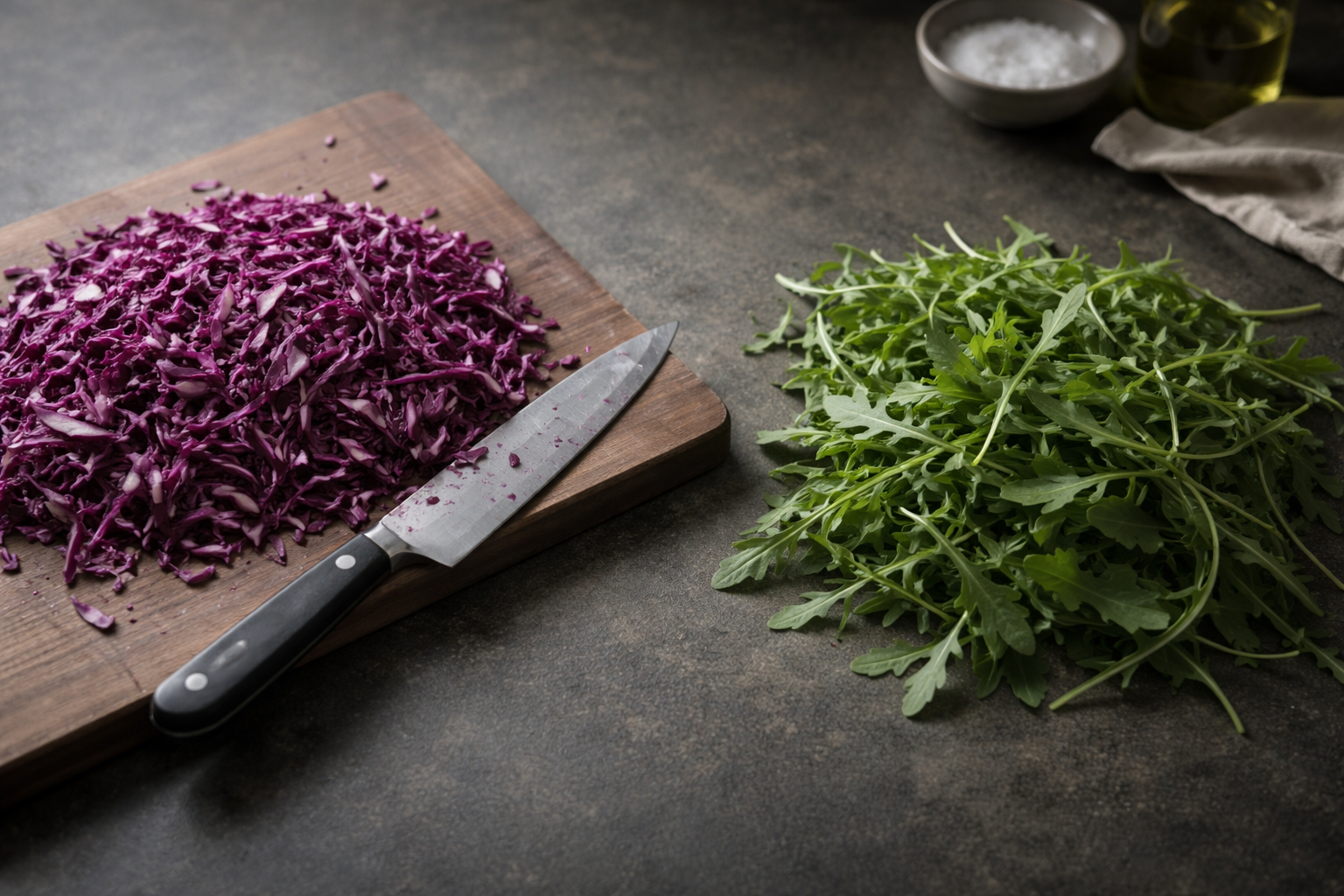
Red cabbage, a cruciferous vegetable, pairs well with arugula. Red cabbage contains glucosinolates (different profile than broccoli, but same class), while arugula provides myrosinase that converts glucosinolates into isothiocyanates and indole-related compounds.
Red cabbage plus arugula salad is one of the cleanest, mechanically sound pairings you can make in this category.
The same preparation as broccoli applies to cabbage: cut first, then wait. Avoid excess heat. This simple recipe accidentally satisfies the 5–10 minute rule.
Red Cabbage & Arugula Enzyme-Forward Salad
Ingredients (2 servings)
• 2 cups red cabbage, finely shredded
• 2 cups arugula, raw
• 2 tbsp extra-virgin olive oil
• 1 tbsp fresh lemon juice or apple cider vinegar
• ½ tsp sea salt (to taste)
Optional (pick one):
• 1–2 tsp Dijon mustard (real mustard, not sweet)
• ¼ tsp mustard seed powder
• 2 tbsp grated raw daikon radish
Method (Do not skip timing)
1. Shred the red cabbage. Spread it out in a bowl and wait 5–10 minutes. This allows myrosinase-driven conversion to begin.
2. Add arugula. Toss gently. Arugula adds additional active myrosinase.
3. Dress lightly. Whisk olive oil, lemon (or vinegar), and salt. Add and toss.
4. Finish with one raw enhancer (optional but smart). Add Dijon, mustard powder, or daikon at the end.
5. Eat promptly. Best within 15–20 minutes of dressing.
Important Note
Red cabbage does not produce sulforaphane in the same quantities as broccoli or sprouts. It produces related isothiocyanates with overlapping (but not identical) effects.Benefits are still relevant for:
• Detoxification signaling
• Inflammation modulation
• Colon epithelial stress regulation
The takeaway: pairing cruciferous vegetables with raw myrosinase sources creates a synergistic combination that maximizes the conversion of beneficial compounds. It's simple, natural, and grounded in the chemistry of how these foods actually work.